
Multi-chain assets and networks
A single wallet can help you view multiple networks, but asset state, gas, contracts and confirmations remain independent per chain. Verify where the asset actually exists before sending.
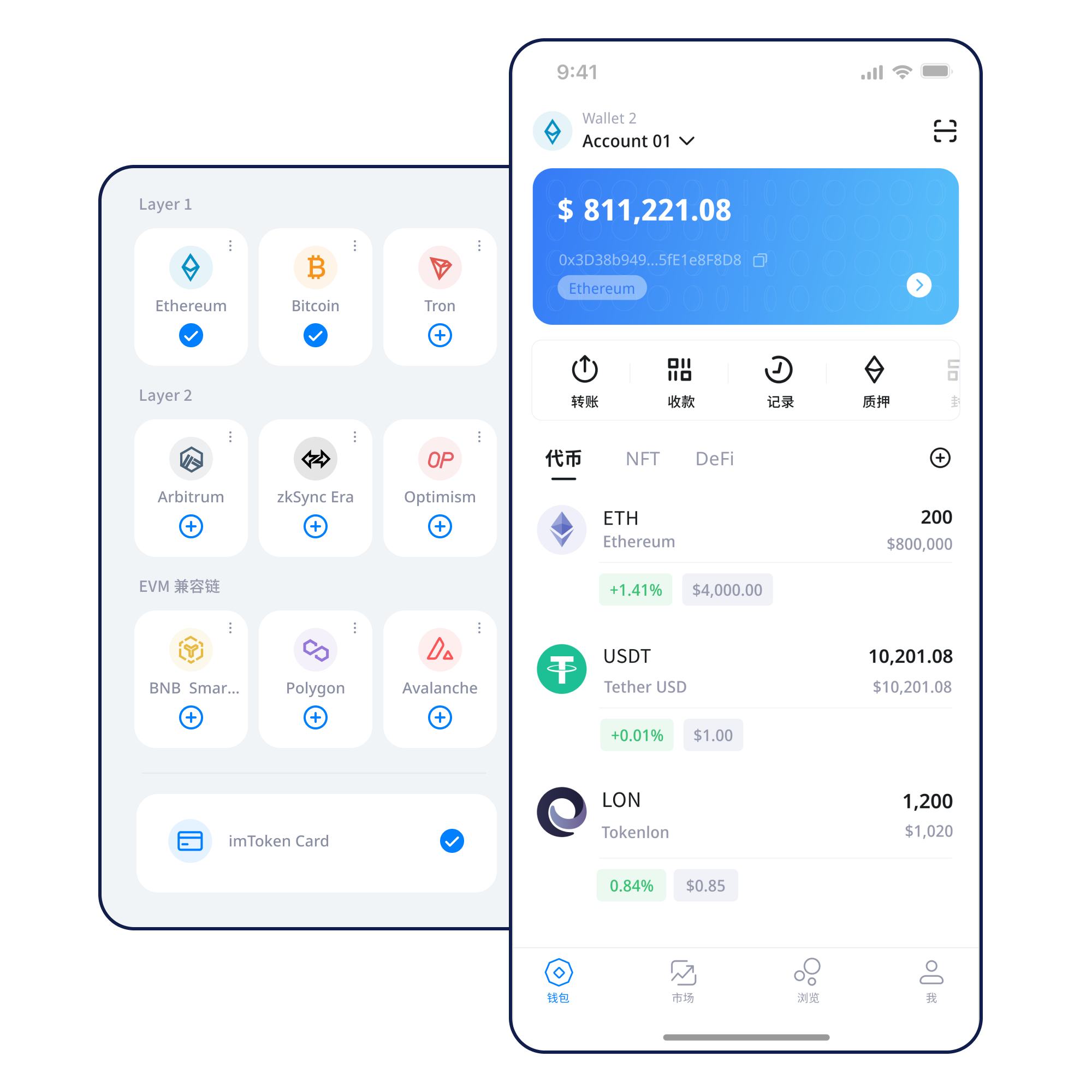
imtoken multi-chain wallet
A multi-chain wallet, blockchain network and Web3 knowledge hub from imtoken
imtoken brings multi-chain asset management, network selection, sending and receiving, DApp connections, signatures, approvals and wallet security into one practical learning path. From creating a wallet to long-term permission management, each action begins with checking the address, network and request details.
You do not need to begin with a glossary. Choose what you are trying to do, then learn which address, network, key or permission needs to be checked at that step.
Learn what a new wallet creates and why an offline backup should be arranged immediately after setup.
Learn the basics →Treat the seed phrase and private keys as the most sensitive data: no screenshots, cloud uploads or sharing.
Backup principles →Confirm the network and asset before sharing an address so the sender can use the same intended network.
Receiving steps →Review the address, network, amount and gas before sending, then keep the transaction hash for verification.
Pre-send checklist →Verify the domain and network first, then review account requests, signatures and token approvals separately.
DApp guide →Assets, networks, transactions and permissions are connected. Understanding those relationships is more reliable than memorizing where buttons appear.
A single wallet can help you view multiple networks, but asset state, gas, contracts and confirmations remain independent per chain. Verify where the asset actually exists before sending.
Review assets, manage networks, inspect activity and check every request when connecting to a DApp from a mobile device.
The receiving address, target network, amount, gas and transaction hash together make a transfer verifiable.
Review the transfer flow →A browser connection establishes a session; it does not automatically approve signatures, transactions or token permissions.
Understand connection permissions →Keep seed phrases and private keys offline and review signatures, approvals and transfers as separate decisions.
From multi-chain concepts and public chains to EVM, Layer 2, gas and confirmations, the network determines where an address, asset and transaction should be verified.
A wallet can provide one interface, while each chain still maintains independent asset state, gas and confirmations.
Understand multi-chain boundaries →Nodes propagate transactions, blocks record state and block explorers help you inspect hashes, heights and confirmations.
Learn public-chain basics →
Contracts, tokens, gas and approvals must be interpreted within the selected EVM network rather than by address appearance alone.
Explore EVM →
Moving assets between a base chain and Layer 2 can involve a bridge, waiting periods and multiple confirmation stages.
Learn Layer 2 →
Submission, pending state, block inclusion and confirmation are affected by network conditions and fee rules.
Follow transaction confirmation →Make backup, network verification, transaction records and approval review part of routine use rather than checks you remember only after something goes wrong.
Use the download entry on this site instead of unknown installers, ads or unsolicited links.
Use a trusted environment and never submit a seed phrase or private key to a webpage.
Keep the seed phrase offline, avoid screenshots and never give a private key to someone claiming to be support.
Check the network name, gas asset, address format and service support before receiving or sending.
Review the address, network and amount before a transfer and keep the transaction hash afterwards.
Read DApp requests before signing, confirm on-chain status and review permissions you no longer need.
Web3 & DApps
Domain, network, account request, signature content, spender and permission scope are all separate checks. Connecting a wallet does not mean you should accept every signature or approval request.
Open the Web3 guideSecurity
Keep your seed phrase and private keys under your own control. Official staff will never ask for a seed phrase, private key or verification code. Verify the address, network and amount before sending; on-chain transactions generally cannot be reversed unilaterally by a wallet. Before using a third-party DApp or smart contract, check the domain, signature details, spender and permission scope. Consider revoking approvals you no longer need, and use extra caution on shared devices, public networks or remote-control sessions.
Academy · Featured start
An address identifies an on-chain account; seed phrases and private keys control signing; the network determines where assets and transactions exist; gas pays for execution; a transaction hash helps trace status; and DApp connections, signatures and token approvals represent different permission layers. Connecting these concepts to actual actions is more useful than memorizing definitions in isolation.
Start learningStaking is not a fixed-return product. Reward changes, exit waiting periods, validator status, network penalties, smart-contract risk and asset-price volatility all belong in the decision.
Learn about Ethereum PoS, validators, reward sources, network state, withdrawals and exits. Rewards can change and exits may require time.
Read fundamentals and risks →Validators can face network penalties, smart contracts can fail, third-party services may have separate rules and digital asset prices fluctuate.
Understand validators →Updates focus on real product use, network changes and security checks without invented partnerships, funding claims, user counts or market rankings.
All download buttons lead to the site’s download page, where the user actively starts the relevant flow.
Stop any request that asks for secrets in the name of wallet recovery, account verification or an airdrop.
Similar address formats do not mean assets are on the same chain; gas and arrival confirmation are network-specific.
Consider revoking permissions that are no longer needed to reduce long-lived access.
Start with practical questions about wallets, networks, gas, DApps, approvals and PoS.
No. Seed phrases and private keys remain under the user’s control, and official staff will never ask for them.
Not necessarily. EVM-compatible networks can share an address format while maintaining independent state.
After a transaction enters a block, later blocks can add confirmations. Networks and services can use different confirmation thresholds.
No. Connection, signatures, transactions and token approvals are separate requests and should be reviewed independently.
No. Staking does not guarantee returns, rewards can change and exit, penalty, contract and market risks remain.
imtoken
Verify the source before downloading, keep keys private and review each transfer, signature or approval before confirming.